Facility and procurement managers rarely get much credit when hygiene supplies just work. Dispensers are stocked, deliveries arrive on time, and nobody has to think twice about restrooms, breakrooms, or cleaning stations. But the moment a supplier drops the ball, a backordered SKU, an inconsistent product batch, a rep who never returns calls, that invisible reliability becomes very visible, very fast.
Choosing the right hygiene supplier isn’t just a purchasing decision. It’s a risk-management decision, a compliance decision and over time, a cost decision. Here’s what to actually look for before you sign — or renew — a contract.
A facility’s hygiene needs rarely stay static. Restrooms, kitchens, breakrooms, medical bays, and industrial areas each have different demands, and a supplier that only covers part of that list means you’re managing multiple vendors, multiple invoices, and multiple points of failure.
Look for a supplier with genuine breadth across:
What to ask: Can this supplier realistically cover 90%+ of our consumable needs, or will we still be running three other vendor relationships alongside them?
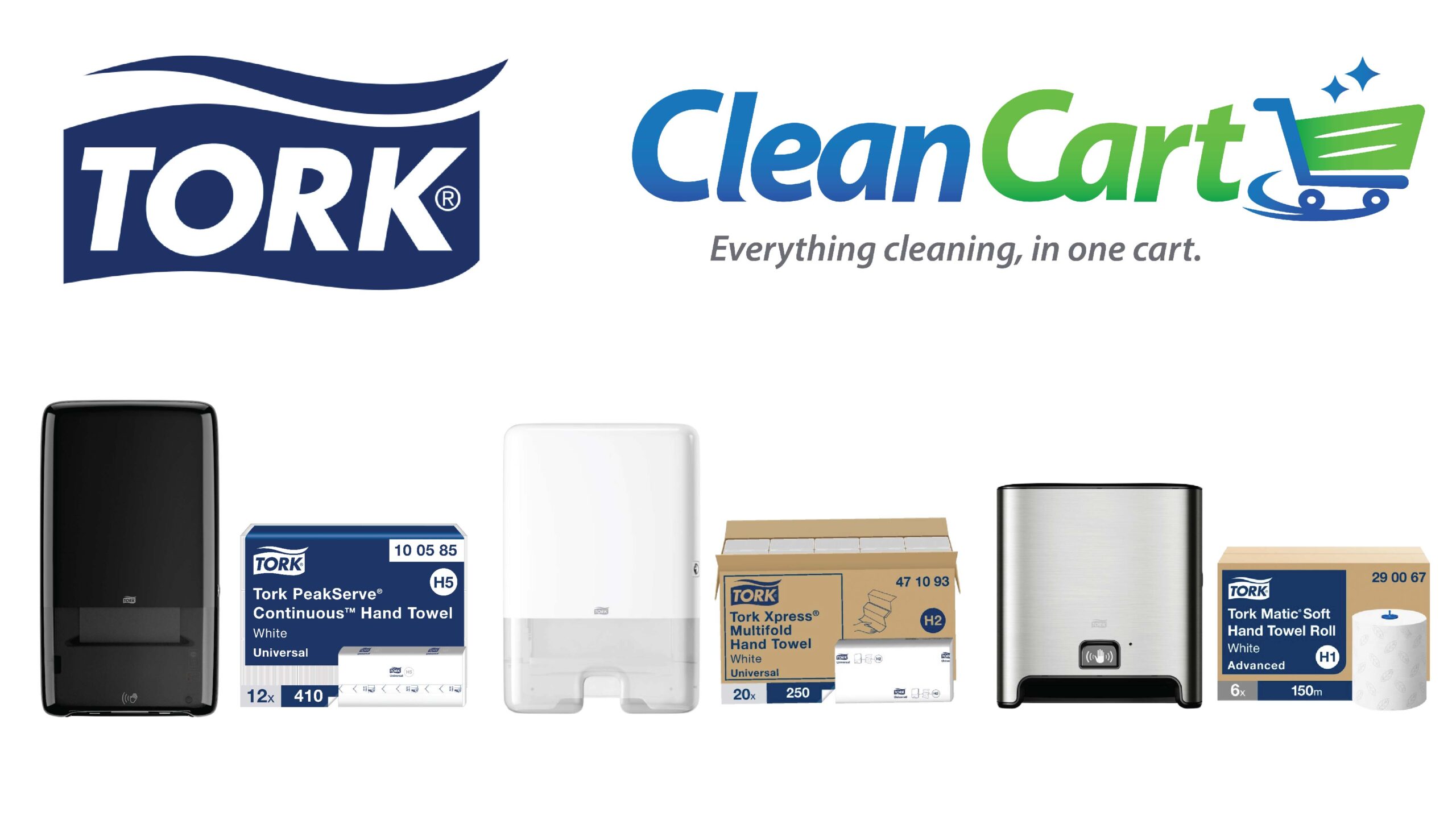
This is where a range like Tork’s system-based approach stands out, dispensers, refills and consumables engineered to work together rather than as a loose collection of separate SKUs. It’s also where a distributor like Clean Cart adds practical value: stocking the full Tork range alongside everyday cleaning and facility essentials, so procurement teams can consolidate orders instead of juggling separate accounts for paper products, chemicals, and site consumables.
Cheap hygiene products are rarely actually cheap. Thin paper that tears, soap that clogs dispensers, or sanitizer that separates in the bottle all drive up usage rates, waste, and complaints — quietly eating any savings on the unit price.
A supplier worth partnering with should be able to show:
Tork‘s positioning here is instructive: its products are engineered around tested performance — absorbency, dispensing efficiency, and consistency — rather than just price point. That’s the standard procurement teams should be benchmarking every supplier against, whether or not they end up choosing Tork specifically.
Product quality gets a supplier in the door. Service is what keeps them there. Ask any facilities manager about a supplier they’ve dropped, and the reason is rarely the product — it’s almost always service.
Evaluate suppliers on:
This is an area where local, hands-on distributors often outperform faraway national accounts. Clean Cart‘s model of pairing recognized brands like Tork with responsive, local account support is a good example of what this should look like in practice; a real point of contact, not a call center.
The lowest unit price is often the most expensive choice once you factor in waste, downtime, and staff time spent chasing problems. A proper cost evaluation looks at:
What to ask: If we modeled this over 12 months of actual usage, not just the invoice line item, which supplier wins?
Across all five criteria — range, QA, service, cost, and support — Tork is a useful benchmark precisely because it was built around solving the system, not just selling paper and soap. Its dispensing systems are designed for consistency and lower waste, its range spans nearly every hygiene category a facility needs, and its quality standards are documented rather than assumed.
For procurement teams, the practical takeaway isn’t necessarily “buy Tork” — it’s “evaluate every supplier against what Tork does well.” When a supplier like Clean Cart brings the Tork range together with responsive local service, that combination is what closes the gap between a good product and a good supplier relationship.
Share this with your team before any supplier decision or renewal conversation.
If you’re checking “no” on more than two or three of these, it’s worth a conversation.

We use cookies to improve your experience, analyse website traffic and support our marketing efforts. You can accept all cookies or manage your preferences. Essential cookies are required for the website to function.